Journal Article
Historical Interpretation and Imagination in a Local Theater: Gasan, Marinduque and its Pugutan Play in 2006 and 2007
Philippine Social Sciences Review
Abstract
The Pugutan (‘beheading’) is a theatrical reenactment of the life of Longhino (Saint Longinus), the Roman soldier who pierced the side of Jesus Christ during the crucifixion and, as a tomb guard, witnessed Christ’s resurrection. In the Philippines, the saint’s life story is derived mainly from the pasyon text, a popular source of Christian narratives written in the local vernacular. The Pugutan play is a part of the Lenten rite-festival known as Moriones (or Moryonan) in the island province of Marinduque in Southern Luzon, Philippines.
This paper focuses on the two Pugutan scripts which were staged in 2006 and 2007 in Gasan, Marinduque. The author of these scripts is Marjun Sosa Moreno, then a high school teacher in Bognuyan, Gasan, Marinduque. Dissatisfied with the function-oriented, fictive plot in the standard Pugutan play, Moreno tried to portray the Longhino story as close as possible to what is historically true. Thus, his scripts for the 2006 and 2007 Pugutan, both titled “Ang Landas Tungo sa Katotohanan” (The Way to Truth), can be considered as an interpretation of history through theater. However, in parts where the historical events remain unclear, Moreno employed his imaginative understanding to approximate the past. Moreno’s use of historical interpretation and imagination is apparent in his treatment of the characters Longhino, Hudas, Barabas, Pilato, Claudia, and Magdalena. Although his interpretative choices are not entirely faultless, the value of Moreno’s techniques rests on their ability to maximize the passion story’s rhetorical power while asserting what he deemed historical.
This paper focuses on the two Pugutan scripts which were staged in 2006 and 2007 in Gasan, Marinduque. The author of these scripts is Marjun Sosa Moreno, then a high school teacher in Bognuyan, Gasan, Marinduque. Dissatisfied with the function-oriented, fictive plot in the standard Pugutan play, Moreno tried to portray the Longhino story as close as possible to what is historically true. Thus, his scripts for the 2006 and 2007 Pugutan, both titled “Ang Landas Tungo sa Katotohanan” (The Way to Truth), can be considered as an interpretation of history through theater. However, in parts where the historical events remain unclear, Moreno employed his imaginative understanding to approximate the past. Moreno’s use of historical interpretation and imagination is apparent in his treatment of the characters Longhino, Hudas, Barabas, Pilato, Claudia, and Magdalena. Although his interpretative choices are not entirely faultless, the value of Moreno’s techniques rests on their ability to maximize the passion story’s rhetorical power while asserting what he deemed historical.
Keywords
Marinduque
Gasan
Pugutan
Moriones
Longhino
Pasyon
Sinakulo
local theater
Read the publication
View Publication
Reach out to the researchers:
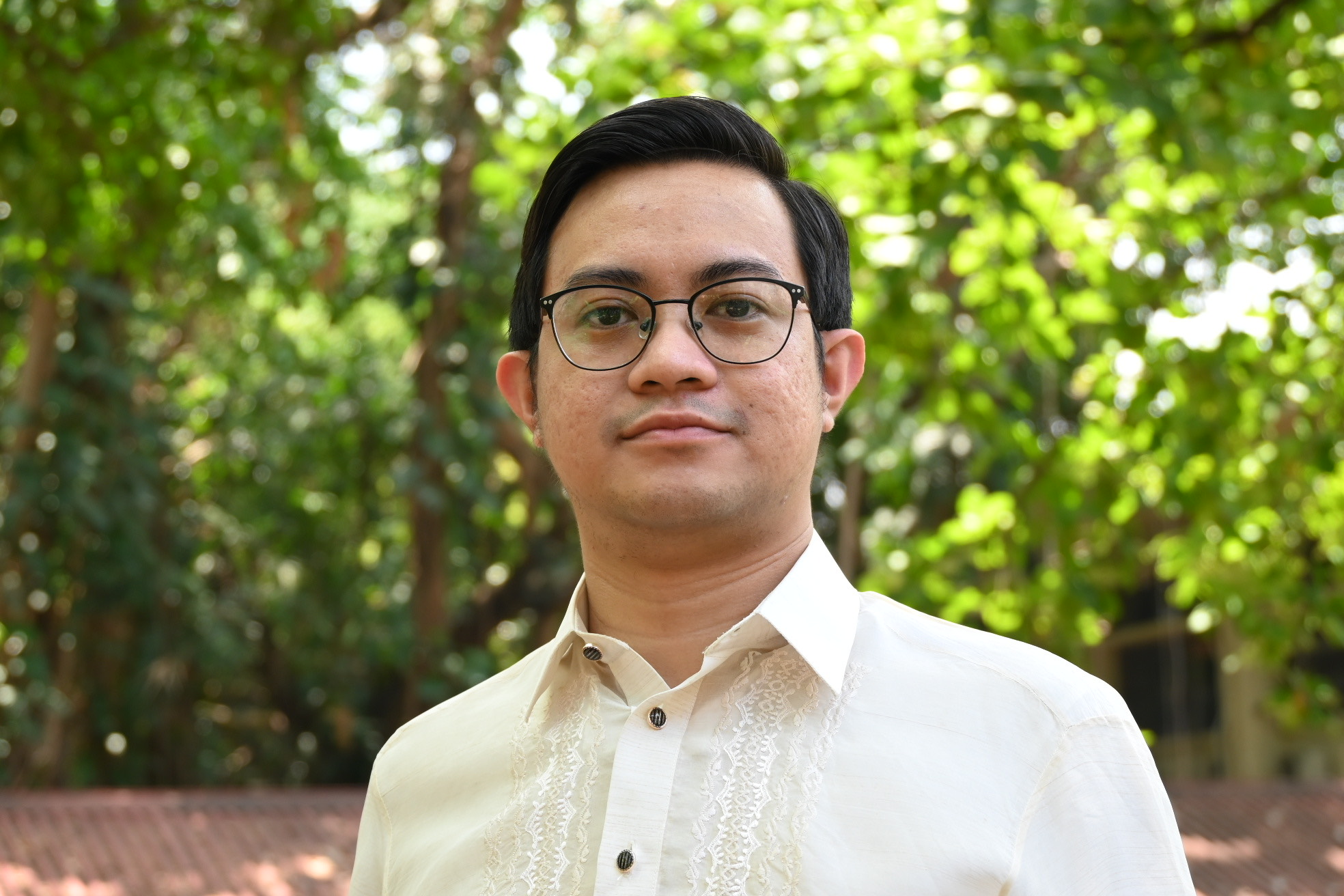
Emmanuel Jayson V. Bolata
evbolata@up.edu.ph