Publications

Uma visão geral da Carrera del Pacífico e o que tornou globais seus trabalhadores
Este capítulo examina a importância de Manila e Acapulco na criação de redes que facilitaram trocas e geraram atividades econômicas no Pacífico espanhol. Também pretende refletir sobre como a interação do comércio e do trabalho no Pacífico moldou a heterogeneidade dos trabalhadores da Carrera. Sua demografia, em particular, nos permite vislumbrar como a Espanha nutriu seu império por meio de uma espinha dorsal composta pela força de trabalho colonial. Finalmente, o capítulo fornece uma visão geral dos trabalhadores da Carrera del Pacífico durante sua fase inicial, desde a construção de suas primeiras estruturas até a tripulação de seus navios e o atendimento às necessidades essenciais de seus portos.

Asian Landowners in the Early Modern Philippines: Examining Composicion de Tierras in Pagsanjan, Laguna, 1697
This chapter examines land ownership in Pagsanjan town, in the province of Laguna in the Philippines, in the late seventeenth century. Lists of “foreign” landowners were drawn from the land survey (composición de tierras) carried out in 1697 in the Philippines. These foreign landowners were other Asians, including Chinese, Japanese, Malabar, their mestizo offspring. and Philippine natives from other towns. The native community represented by the local elite resented foreign land ownership and used the opportunity given by the composición de tierras to petition the Spanish government to allocate the lands to them. The framework offered by institutional bricolage is used to understand these dynamics. The chapter argues that norms governing the allocation and ownership of land resulted from a continuous negotiation among these stakeholders through colonial institutions of governance. Moreover, the land tenure of foreign and mestizo settlers was likewise a result of compromises motivated by different economic and political factors at play in the seventeenth-century Philippines.
Textual Discrepancies, Historical Distortions: Martial Law Period Narratives in Philippine History Textbooks
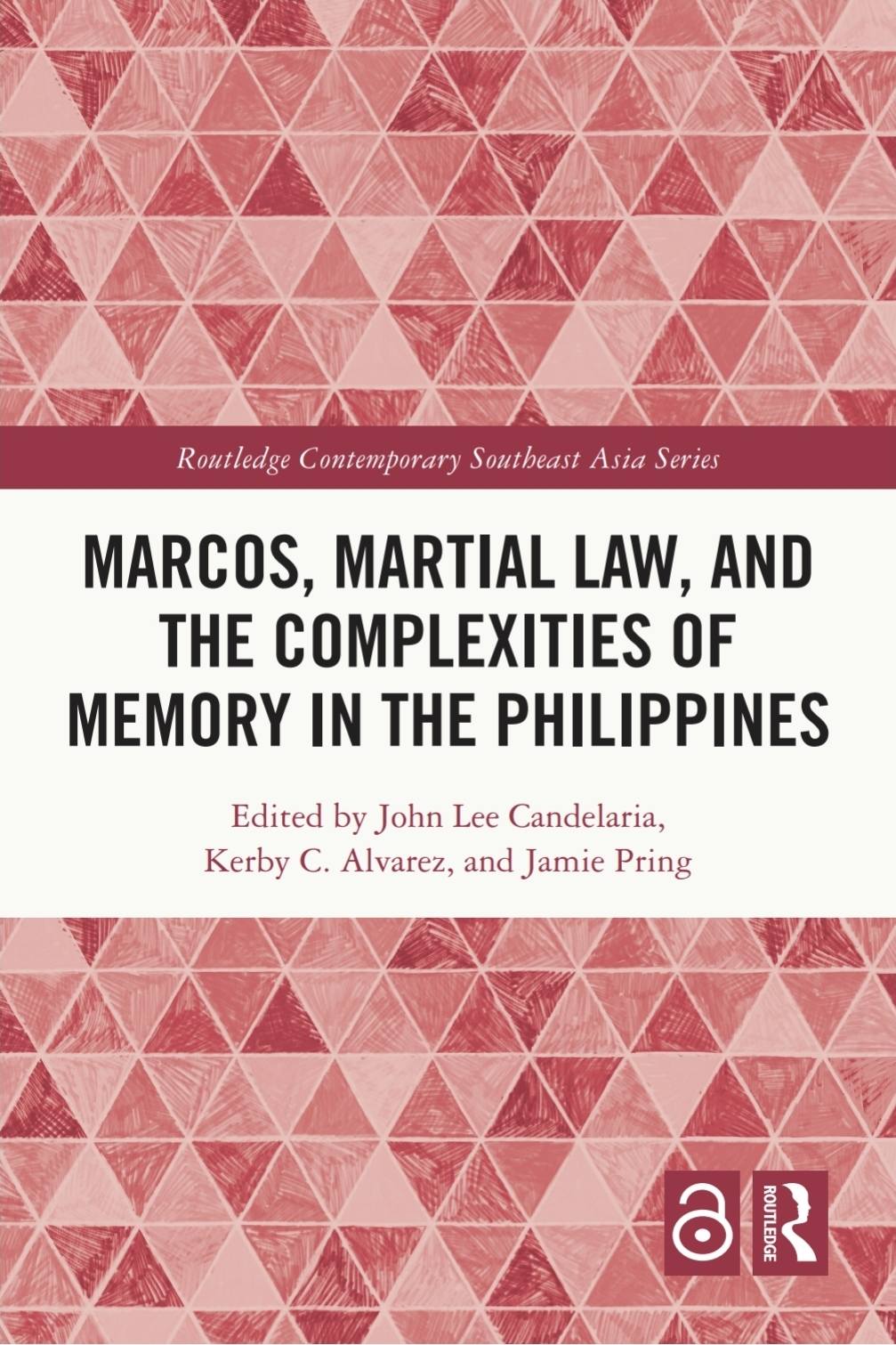
This chapter critically reviews narratives of the Martial Law period in selected Grade 6 Philippine history textbooks, foregrounding how essential yet controversial topics about this contested period are discussed by textbook authors. The review grapples with four key questions: How do textbook authors describe the Marcos authoritarian regime, the Martial Law period, and the EDSA People Power Revolution? What is included and excluded in the textbooks' overall narrative about these tumultuous years? Are there historical discrepancies and distortions found in the narratives of the textbooks examined? To what extent do these narratives perpetuate historical myths, silences, and inconsistencies? By answering these questions, the chapter aims to contribute to the existing academic conversation on the representation of the Martial Law period in textbooks. It also seeks to offer a new perspective on how textbook narratives about this period in contemporary Philippine history are constructed.
The Role of Memory in the Present and Future of Philippine Politics
Revisiting the question, “how could the same society that expelled the Marcos family in 1986 elect the dictator's son to the presidency in 2022?” this concluding chapter synthesizes findings from across the volume, using the 2016 burial of Ferdinand Marcos Sr. at the Libingan ng mga Bayani as the convergence point where the dynamics documented in individual chapters become visible in relation to one another. The answer confounds scholarly expectations. Democratic institutions themselves became vehicles for rehabilitation, their standard procedures exploited to honor a dictator and marginalize his victims. Factual correction failed because memory operated through affect, embodiment, and regional identity rather than information. Digital platforms amplified distortion but did not create it; the infrastructure was built decades earlier through monuments, textbooks, and institutional capture. The memory architecture that the Marcos regime constructed was never dismantled after 1986. Three decades later, it enabled the very restoration that the democratic transition was meant to foreclose. The Philippine case reveals that how societies remember their authoritarian past shapes not only present politics but also whether such pasts can be reinstantiated in the future.
Manipulated Memories, Controlled Spaces: Memorial Sites and the Complexities of Marcosian Historical Distortion
This study analyzes the Libingan ng mga Bayani (LNMB) and the People Power Monument (PPM) as sites of Marcosian historical distortion, supported by the administration of former President Rodrigo R. Duterte (2016–2022). By examining the contemporary phenomenon of negative historical revisionism, this paper presents two historical observations. First, memories and narratives of the 1986 EDSA People Power Revolution are malleable and are strategically manipulated to suit political ends. Second, the Marcosian project of historical distortion, which sanitizes the Martial Law years and demonizes the legacy of the EDSA Revolution, occurred in the controlled spaces of the LNMB and the PPM. Through Marcos's burial in the LNMB in 2016 and the changes in the EDSA Revolution commemoration since 2017, the Duterte government systematically implemented measures to sanitize the memory of the Marcos dictatorship and to discredit and reframe the “EDSA narrative.” These actions reinvented Marcos's authoritarian rule as a justification for Duterte's own version of iron-fist rule in the country. These two places serve as emblematic representations of both a state-supported program of sanitizing a dark past and the complex nature of historical memory, spaces of memory, and public remembering.
Marcos-Era Memory as an Embattled Terrain in Contemporary Philippines
How could the same society that expelled the Marcos family through the 1986 People Power Revolution elect the dictator's son to the presidency in 2022? This introduction argues that Ferdinand Marcos Jr.'s victory reflects a deeper transformation in Philippine historical memory, one shaped by material infrastructure, regional identity, generational dynamics, and digital mediation working in concert. Drawing on memory studies scholarship, the chapter develops a four-dimensional framework that treats memory as actively constructed rather than passively stored, examines the institutional architecture that anchors competing narratives, traces memory's circulation across communities and platforms, and attends to the power relations underlying all memory work. The volume's chapters apply this framework to diverse empirical sites: war memorials, cemetery politics, museum curation, textbook production, transitional justice mechanisms, Ilocano loyalist communities, Moro collective memory, social media nostalgia, and contemporary policy revivals. By mapping these sites, the volume demonstrates that the Marcos political restoration succeeded through the strategic mobilization of memory itself, revealing how struggles over the past can enable authoritarian values' return within democratic frameworks.

Remarkable Three
Plants that heal, plants that nourish 🌿
The Department of History, UP Diliman shares two essays by Dr. Ma. Mercedes G. Planta in Food and Ethnographic Paraphernalia (2025), released under the Museo ng Kaalamang Katutubó imprint.
Food and Ethnographic Paraphernalia is a book about food—and the material culture that surrounds it. It brings together essays by academics and cultural professionals and pairs them with ethnographic objects held in trust by the Museo ng Kaalamang Katutubó, inviting readers into a conversation about food, objects, and everyday life in the Philippines.
In “Interface: Plants that Heal, Plants that Nourish,” Dr. Planta examines the long-standing overlap between food and medicine in the Philippines—how everyday plants in the Filipino diet have also functioned as remedies, preventives, and sources of well-being across centuries. Drawing from historical records, missionary pharmacopoeias, and contemporary scientific research, the essay shows how Filipino plant knowledge consistently blurs the boundary between nourishment and healing. From bawang or garlic (Allium sativum), ampalaya or bitter gourd (Momordica charantia), and bayabas or guava (Psidium guajava), to malunggay or moringa (Moringa oleifera) and siling labuyo or Filipino bird’s eye chili (Capsicum frutescens), plants emerge not merely as ingredients or cures, but as part of the Filipinos’ way of life shaped by the Philippines’ rich biodiversity, environment, and experience.
The essay “Remarkable Three” turns to three of the Philippines’ most enduring plants—langka or jackfruit (Artocarpus heterophyllus), niyog or coconut (Cocos nucifera), and saging or banana (Musa × paradisiaca)—to show how these familiar staples have long sustained Filipino households as part of everyday food and medicine. Consumed regularly yet rich in therapeutic value, these plants reveal how nourishment, healing, and survival have always been closely intertwined.
The banana, in particular, later entered wider circuits of knowledge. Introduced to the Western world—particularly Europe—through the campaigns of Alexander the Great, it later captivated Carl Linnaeus, who formalized the binomial nomenclature system and, in the mid-18th century, became the first to successfully cultivate a fruit-bearing banana in a climate-controlled greenhouse in the Netherlands. Enamored of the plant, he named it Musa × paradisiaca, believing it to be the forbidden fruit of Eden.
Read together, the two essays invite readers to see plants, food, and material culture as interconnected forms of knowledge—rooted in biodiversity, history, and everyday practice, and made visible through ethnographic objects from the Museo ng Kaalamang Katutubó.
📘 Food and Ethnographic Paraphernalia is now available and ready for orders.
For copies and inquiries, please email administrator@muskat.org
#PlantsThatHeal #PlantsThatNourish #FoodAndMedicine #FoodAsMedicine
#PhilippineHistory #HistoryOfMedicine #Ethnobotany #LocalKnowledge
#MaterialCulture #EverydayPractices #BiodiversityAndCulture #LivingHeritage #TraditionalMedicineInTheColonialPhilippines
#MuseoNgKaalamangKatutubó #UPDiliman #UPHistory #PhilippineStudies
@UPDilimanHistory @MuseoNgKaalamangKatutubó
The Department of History, UP Diliman shares two essays by Dr. Ma. Mercedes G. Planta in Food and Ethnographic Paraphernalia (2025), released under the Museo ng Kaalamang Katutubó imprint.
Food and Ethnographic Paraphernalia is a book about food—and the material culture that surrounds it. It brings together essays by academics and cultural professionals and pairs them with ethnographic objects held in trust by the Museo ng Kaalamang Katutubó, inviting readers into a conversation about food, objects, and everyday life in the Philippines.
In “Interface: Plants that Heal, Plants that Nourish,” Dr. Planta examines the long-standing overlap between food and medicine in the Philippines—how everyday plants in the Filipino diet have also functioned as remedies, preventives, and sources of well-being across centuries. Drawing from historical records, missionary pharmacopoeias, and contemporary scientific research, the essay shows how Filipino plant knowledge consistently blurs the boundary between nourishment and healing. From bawang or garlic (Allium sativum), ampalaya or bitter gourd (Momordica charantia), and bayabas or guava (Psidium guajava), to malunggay or moringa (Moringa oleifera) and siling labuyo or Filipino bird’s eye chili (Capsicum frutescens), plants emerge not merely as ingredients or cures, but as part of the Filipinos’ way of life shaped by the Philippines’ rich biodiversity, environment, and experience.
The essay “Remarkable Three” turns to three of the Philippines’ most enduring plants—langka or jackfruit (Artocarpus heterophyllus), niyog or coconut (Cocos nucifera), and saging or banana (Musa × paradisiaca)—to show how these familiar staples have long sustained Filipino households as part of everyday food and medicine. Consumed regularly yet rich in therapeutic value, these plants reveal how nourishment, healing, and survival have always been closely intertwined.
The banana, in particular, later entered wider circuits of knowledge. Introduced to the Western world—particularly Europe—through the campaigns of Alexander the Great, it later captivated Carl Linnaeus, who formalized the binomial nomenclature system and, in the mid-18th century, became the first to successfully cultivate a fruit-bearing banana in a climate-controlled greenhouse in the Netherlands. Enamored of the plant, he named it Musa × paradisiaca, believing it to be the forbidden fruit of Eden.
Read together, the two essays invite readers to see plants, food, and material culture as interconnected forms of knowledge—rooted in biodiversity, history, and everyday practice, and made visible through ethnographic objects from the Museo ng Kaalamang Katutubó.
📘 Food and Ethnographic Paraphernalia is now available and ready for orders.
For copies and inquiries, please email administrator@muskat.org
#PlantsThatHeal #PlantsThatNourish #FoodAndMedicine #FoodAsMedicine
#PhilippineHistory #HistoryOfMedicine #Ethnobotany #LocalKnowledge
#MaterialCulture #EverydayPractices #BiodiversityAndCulture #LivingHeritage #TraditionalMedicineInTheColonialPhilippines
#MuseoNgKaalamangKatutubó #UPDiliman #UPHistory #PhilippineStudies
@UPDilimanHistory @MuseoNgKaalamangKatutubó

Construcción Naval y trabajadores chinos en las Filipinas, 1595-1755
Este capítulo examina cómo los trabajadores chinos se convirtieron en un componente esencial de la fuerza laboral que construyó galeones en Filipinas durante la temprana modernidad. Describe y analiza a los actores, instituciones y mecanismos involucrados en la contratación y despliegue de estos trabajadores, enmarcándolos dentro de los contextos políticos, económicos y sociales de la época. Se destaca que, aunque el Estado colonial español dependía principalmente de trabajadores filipi-nos, especialmente de mano de obra forzada o polistas, también recurría a trabajadores chinos, cuya organización, salarios bajos y ética laboral eran altamente valorados no sólo en las Filipinas, sino también en otras partes de Asia. En última instancia, el presente capítulo contribuye a nuestra comprensión de la economía colonial, el trabajo, las relaciones étnicas y la administración del Estado.
Este estudio se divide en tres partes. En la primera, se discute el contexto histórico del periodo que abarca desde finales del siglo xVI hasta mediados del siglo xvIII. La discusión comienza en 1595, año mencionado en los documentos de archivo en el que se empleó por primera vez a trabajadores chinos para talar madera en los bosques de Pampanga, necesaria para la construcción de barcos en el astillero de Cavite.' Abarca hasta 1755, cuando el gobernador general Pedro Manuel de Arandia emitió un decreto para expulsar a los chinos no cristianos de las islas y limitar las actividades de los cristianos a las comerciales? Este decreto también condujo a la abolición del sistema de contratos mediante el cual se empleaba a chinos frecuentemente no cristianos—en los astilleros.
Este estudio se divide en tres partes. En la primera, se discute el contexto histórico del periodo que abarca desde finales del siglo xVI hasta mediados del siglo xvIII. La discusión comienza en 1595, año mencionado en los documentos de archivo en el que se empleó por primera vez a trabajadores chinos para talar madera en los bosques de Pampanga, necesaria para la construcción de barcos en el astillero de Cavite.' Abarca hasta 1755, cuando el gobernador general Pedro Manuel de Arandia emitió un decreto para expulsar a los chinos no cristianos de las islas y limitar las actividades de los cristianos a las comerciales? Este decreto también condujo a la abolición del sistema de contratos mediante el cual se empleaba a chinos frecuentemente no cristianos—en los astilleros.
Los marineros del Pacífico como los primeros trabajadores globales, 1580-1640
El presente estudio tiene por objetivo comprender la actividad de aproximadamente 5 000 trabajadores globales, quienes, entre 1580 y 1640, sirvieron como marinos en la carrera del Pacífico, dejando tras de sí una abundante evidencia documental. La principal premisa que lo sustenta es que, durante el periodo estudiado, estos trabajadores fueron intermediarios y factores de la naciente economía-mundo, debido no sólo al impacto global del tráfico mercantil entre Manila y Acapulco, sino también a la dimensión de los intercambios culturales que se generaron más allá de Filipinas y Nueva España. Durante el periodo estudiado, la carrera del Pacífico generó un mercado de productos básicos, que fluyó a través de Asia, América y Europa, y dio lugar a un importante mercado laboral, de manera paralela al movimiento global de artículos suntuarios y productos manufacturados de diverso orden. Al desempeñar un papel activo como tripulaciones de la carrera del Pacífico, y transportar mercancías para el consumo en diversas regiones, los marineros se transformaron en trabajadores globales, teniendo la oportunidad de trabajar y comerciar dentro de los circuitos comerciales del imperio español.1 Estos trabajadores globales permanecen en gran medida sin reconocimiento en los anales de la historia global del trabajo. El presente estudio, que destaca la relevancia de los trabajadores de menor rango abordo de los galeones, rinde homenaje a un grupo social que respondió a los desafíos de la globalización temprana, contribuyendo de manera decisiva a la construcción del mundo interconectado en que vivimos hoy.
Interface: Plants that Heal, Plants that Nourish
Plants that heal, plants that nourish 🌿
The Department of History, UP Diliman shares two essays by Dr. Ma. Mercedes G. Planta in Food and Ethnographic Paraphernalia (2025), released under the Museo ng Kaalamang Katutubó imprint.
Food and Ethnographic Paraphernalia is a book about food—and the material culture that surrounds it. It brings together essays by academics and cultural professionals and pairs them with ethnographic objects held in trust by the Museo ng Kaalamang Katutubó, inviting readers into a conversation about food, objects, and everyday life in the Philippines.
In “Interface: Plants that Heal, Plants that Nourish,” Dr. Planta examines the long-standing overlap between food and medicine in the Philippines—how everyday plants in the Filipino diet have also functioned as remedies, preventives, and sources of well-being across centuries. Drawing from historical records, missionary pharmacopoeias, and contemporary scientific research, the essay shows how Filipino plant knowledge consistently blurs the boundary between nourishment and healing. From bawang or garlic (Allium sativum), ampalaya or bitter gourd (Momordica charantia), and bayabas or guava (Psidium guajava), to malunggay or moringa (Moringa oleifera) and siling labuyo or Filipino bird’s eye chili (Capsicum frutescens), plants emerge not merely as ingredients or cures, but as part of the Filipinos’ way of life shaped by the Philippines’ rich biodiversity, environment, and experience.
The essay “Remarkable Three” turns to three of the Philippines’ most enduring plants—langka or jackfruit (Artocarpus heterophyllus), niyog or coconut (Cocos nucifera), and saging or banana (Musa × paradisiaca)—to show how these familiar staples have long sustained Filipino households as part of everyday food and medicine. Consumed regularly yet rich in therapeutic value, these plants reveal how nourishment, healing, and survival have always been closely intertwined.
The banana, in particular, later entered wider circuits of knowledge. Introduced to the Western world—particularly Europe—through the campaigns of Alexander the Great, it later captivated Carl Linnaeus, who formalized the binomial nomenclature system and, in the mid-18th century, became the first to successfully cultivate a fruit-bearing banana in a climate-controlled greenhouse in the Netherlands. Enamored of the plant, he named it Musa × paradisiaca, believing it to be the forbidden fruit of Eden.
Read together, the two essays invite readers to see plants, food, and material culture as interconnected forms of knowledge—rooted in biodiversity, history, and everyday practice, and made visible through ethnographic objects from the Museo ng Kaalamang Katutubó.
📘 Food and Ethnographic Paraphernalia is now available and ready for orders.
For copies and inquiries, please email administrator@muskat.org
#PlantsThatHeal #PlantsThatNourish #FoodAndMedicine #FoodAsMedicine
#PhilippineHistory #HistoryOfMedicine #Ethnobotany #LocalKnowledge
#MaterialCulture #EverydayPractices #BiodiversityAndCulture #LivingHeritage #TraditionalMedicineInTheColonialPhilippines
#MuseoNgKaalamangKatutubó #UPDiliman #UPHistory #PhilippineStudies
@UPDilimanHistory @MuseoNgKaalamangKatutubó
The Department of History, UP Diliman shares two essays by Dr. Ma. Mercedes G. Planta in Food and Ethnographic Paraphernalia (2025), released under the Museo ng Kaalamang Katutubó imprint.
Food and Ethnographic Paraphernalia is a book about food—and the material culture that surrounds it. It brings together essays by academics and cultural professionals and pairs them with ethnographic objects held in trust by the Museo ng Kaalamang Katutubó, inviting readers into a conversation about food, objects, and everyday life in the Philippines.
In “Interface: Plants that Heal, Plants that Nourish,” Dr. Planta examines the long-standing overlap between food and medicine in the Philippines—how everyday plants in the Filipino diet have also functioned as remedies, preventives, and sources of well-being across centuries. Drawing from historical records, missionary pharmacopoeias, and contemporary scientific research, the essay shows how Filipino plant knowledge consistently blurs the boundary between nourishment and healing. From bawang or garlic (Allium sativum), ampalaya or bitter gourd (Momordica charantia), and bayabas or guava (Psidium guajava), to malunggay or moringa (Moringa oleifera) and siling labuyo or Filipino bird’s eye chili (Capsicum frutescens), plants emerge not merely as ingredients or cures, but as part of the Filipinos’ way of life shaped by the Philippines’ rich biodiversity, environment, and experience.
The essay “Remarkable Three” turns to three of the Philippines’ most enduring plants—langka or jackfruit (Artocarpus heterophyllus), niyog or coconut (Cocos nucifera), and saging or banana (Musa × paradisiaca)—to show how these familiar staples have long sustained Filipino households as part of everyday food and medicine. Consumed regularly yet rich in therapeutic value, these plants reveal how nourishment, healing, and survival have always been closely intertwined.
The banana, in particular, later entered wider circuits of knowledge. Introduced to the Western world—particularly Europe—through the campaigns of Alexander the Great, it later captivated Carl Linnaeus, who formalized the binomial nomenclature system and, in the mid-18th century, became the first to successfully cultivate a fruit-bearing banana in a climate-controlled greenhouse in the Netherlands. Enamored of the plant, he named it Musa × paradisiaca, believing it to be the forbidden fruit of Eden.
Read together, the two essays invite readers to see plants, food, and material culture as interconnected forms of knowledge—rooted in biodiversity, history, and everyday practice, and made visible through ethnographic objects from the Museo ng Kaalamang Katutubó.
📘 Food and Ethnographic Paraphernalia is now available and ready for orders.
For copies and inquiries, please email administrator@muskat.org
#PlantsThatHeal #PlantsThatNourish #FoodAndMedicine #FoodAsMedicine
#PhilippineHistory #HistoryOfMedicine #Ethnobotany #LocalKnowledge
#MaterialCulture #EverydayPractices #BiodiversityAndCulture #LivingHeritage #TraditionalMedicineInTheColonialPhilippines
#MuseoNgKaalamangKatutubó #UPDiliman #UPHistory #PhilippineStudies
@UPDilimanHistory @MuseoNgKaalamangKatutubó
| Title | Book | Faculty Involved | Keywords | Year |
|---|---|---|---|---|
| Uma visão geral da Carrera del Pacífico e o que tornou globais seus trabalhadores | Mares e Delocamentos: Historia Maritima em Perspectiva Hispano-Americana | Kristyl N. Obispado, Ph.D. | 2026 | |
| Asian Landowners in the Early Modern Philippines: Examining Composicion de Tierras in Pagsanjan, Laguna, 1697 | Institutional Bricolage, Property Rights, and Social Practices in the Colonial World | Grace Liza Y. Concepcion, Ph.D. | 2026 | |
| Textual Discrepancies, Historical Distortions: Martial Law Period Narratives in Philippine History Textbooks | Marcos, Martial Law, and the Complexities of Memory in the Philippines | Francisco Jayme Paolo A. Guiang, Aaron F. Viernes, Dondy Pepito G. Ramos II | 2026 | |
| The Role of Memory in the Present and Future of Philippine Politics | Marcos, Martial Law, and the Complexities of Memory in the Philippines | Kerby C. Alvarez, Ph.D. | 2026 | |
| Manipulated Memories, Controlled Spaces: Memorial Sites and the Complexities of Marcosian Historical Distortion | Marcos, Martial Law, and the Complexities of Memory in the Philippines | Kerby C. Alvarez, Ph.D. | 2026 | |
| Marcos-Era Memory as an Embattled Terrain in Contemporary Philippines | Marcos, Martial Law, and the Complexities of Memory in the Philippines | Kerby C. Alvarez, Ph.D. | 2026 | |
| Remarkable Three | Food and Ethnographic Paraphernalia | Ma. Mercedes G. Planta, Ph.D. | 2025 | |
| Construcción Naval y trabajadores chinos en las Filipinas, 1595-1755 | Los Fundamentos Industriales del Galeón de Manila-Acapulco | Jely A. Galang, Ph.D. | 2025 | |
| Los marineros del Pacífico como los primeros trabajadores globales, 1580-1640 | Los Fundamentos Industriales del Galeón de Manila-Acapulco | Kristyl N. Obispado, Ph.D. | 2025 | |
| Interface: Plants that Heal, Plants that Nourish | Food and Ethnographic Paraphernalia | Ma. Mercedes G. Planta, Ph.D. | 2025 | |
| Mga Tsinong Manggagawa sa Kamaynilaan noong Ikalabingsiyam na Dantaon | Kasaysayan, Kamaynilaan, Kababaihan: Mga Pananaliksik bilang Pagpupugay kay Dr. Ma. Luisa T. Camagay | Jely A. Galang, Ph.D. | 2025 | |
| Maagang Etnograpiya sa Pilipinas: Ang Kababaihan sa Mata ng mga Europeong Manlalakbay sa Panahong Kolonyal | Kasaysayan, Kamaynilaan, Kababaihan: Mga Pananaliksik bilang Pagpupugay kay Dr. Ma. Luisa T. Camagay | Janet S. Reguindin-Estella, Ph.D. | 2025 | |
| India in the Heart and Soul of the Filipino | A Journey of Enduring and Soaring Partnership | Ian Christopher B. Alfonso, Ph.D. | Baybayin, Laguna Copperplate Inscription, Galleon Trade, Carenderia, Philippine Revolution | 2025 |
| The Diorama Experience of Philippine History | The Diorama Experience of Philippine History | Jely A. Galang, Ph.D., Rhodalyn C. Wani-Obias, Ph.D., Janet S. Reguindin-Estella, Ph.D., Francisco Jayme Paolo A. Guiang | 2025 | |
| At gayon ma’y gumagalaw Modernong kaalaman, pulitikang kolonyal, at ang 'Trial of Galileo' ni Juan Luna | The Filipino worldview through art, images, and objects. From indigenous cultures to the 19th century | Emmanuel Jayson V. Bolata | Juan Luna, Trial of Galileo, Propaganda Movement, Filipino enlightement, Juicio a Galileo, Galileo, Movimiento de propaganda, Ilustración filipina | 2025 |
| Inventing a People. Distorting the Images of Macabebe, 1899 | The Filipino worldview through art, images, and objects. From indigenous cultures to the 19th century | Ian Christopher B. Alfonso, Ph.D. | José de Olivares, Aztecs, Macabebe Scouts, Tinguians, Emilio Aguinaldo, Aztecas, Exploradores macabebe, Tinguianos | 2025 |
| Independence and Public Health: Technologies of Rule in the Colonial Philippines, 1900–1930s | Dreams of Prevention and Control: Policing and Public Health in Colonial Asia | Ma. Mercedes G. Planta, Ph.D. | 2025 | |
| Indigenous datus' Constructions of Colonial Enslavement in the Philippines of Spain's Transpacific West | The Routledge Companion to Race in Early Modern Artistic, Material, and Visual Production | Nicholas Michael C. Sy | 2025 | |
| Bridging Science and Local Knowledge/Perception: A Case Study of Manila Bay Coastal Provinces (Philippines) After the 1988 Red Tide Episode | Scientists and the Establishment of a Mass Environmental Awareness (1950-1990) | Ma. Luisa De Leon-Bolinao, Ph.D. | 2025 | |
| A Woman, a Certain Sora | More Pinay Than We Admit 2: The Filipinas Emerges from the Margins | Maria Serena I. Diokno, Ph.D. | 2025 | |
| Road to Political Empowerment: Women’s Organizations and the Fight for Suffrage (1905-1937) | More Pinay Than We Admit 2: The Filipinas Emerges from the Margins | Janet S. Reguindin-Estella, Ph.D. | 2025 | |
| Sweet Hopes and Delightful Longings”: Motherhood in Early Twentieth Century Philippines. | More Pinay Than We Admit 2: The Filipinas Emerges from the Margins | Rhodalyn C. Wani-Obias, Ph.D. | 2025 | |
| Illegal Immigration and Chinese Transnational Networks in Southern Philippines, 1850–1898 | Transnational Southeast Asia: Communities, Contestations and Cultures | Jely A. Galang, Ph.D. | Chinese, Philippines, Illegal migration, Sulu, Mindanao | 2025 |
| Optics, Illusions, and Historical Philippine Populations | Everyday Life in the Philippines, 1657–1699 | Nicholas Michael C. Sy | 2025 | |
| Wills of the Dead: Inheritance and Other Legacies in Early Modern Philippines | Everyday Life in the Philippines, 1657–1699 | Grace Liza Y. Concepcion, Ph.D. | 2025 | |
| Navigating Legal Frontiers: Spanish consulates in Singapore and Hong Kong in the second half of the nineteenth century | Redes Consulares en el Mar de China. Cónsules extranjeros en Filipinas Cónsules españoles en China | Ros A. Costelo, Ph.D. | 2024 | |
| Colonias Entrelazadas: Filipinas y el Establecimiento de los Consulados Españoles en Singapur y Hong Kong en la Segunda Mitad del Siglo XIX | Cónsules e Imperios El establecimiento de consulados extranjeros en las Filipinas del Siglo XIX | Ros A. Costelo, Ph.D. | 2023 | |
| Indigenous Landowners in the 17th-century Philippines. | 1521 Revisited: The Quincentennial Commemorations in the Philippines, volume III, 184-200 | Grace Liza Y. Concepcion, Ph.D. | Land ownership, 17th century, land dispute, land sale, Philippines | 2023 |
| Lo que entra por la boca no hace daño al alma: food, sailors, and the seventeenth-century Spanish Pacific | Sincronías Barrocas (Siglos XVI-XVIII): Agentes, textos y objetos entre Iberoamérica, Asia y Europa | Kristyl N. Obispado, Ph.D. | Sailors’ food, seventeenth century, Pacific sailor, heresy, Spanish empire | 2023 |
| Cabecilla principal de sangleyes and Chinese immigration in the late- eighteenth century Philippines | Sincronías Barrocas (Siglos XVI-XVIII): Agentes, textos y objetos entre Iberoamérica, Asia y Europa | Jely A. Galang, Ph.D. | Chinese laborers, cabecilla principal, immigration, Manila | 2023 |
| Paramount Yet Frontier: A Historiographical Appraisal of Select 18th-Century Philippine Geological Disasters | Sincronías Barrocas (Siglos XVI-XVIII): Agentes, textos y objetos entre Iberoamérica, Asia y Europa | Kerby C. Alvarez, Ph.D. | Earthquakes, volcanic eruptions, eighteenth-century Philippines, historical disasters, Philippine colonial history | 2023 |
| Si Rene O. Villanueva sa Panimulang Yugto ng Pag-akda para sa Bata, 1977-1986 | Bata, Hiwaga, Bansa: Pamana ni Rene O. Villanueva sa Panitikang Pambata | Emmanuel Jayson V. Bolata | Rene Villanueva, panitikang pambata, kasaysayang pampanitikan | 2023 |
| The Czechs in the Philippines in World War II | Kaibigan-Prátelé: Czech-Philippines | Ricardo T. Jose, Ph.D. | 2023 | |
| Surviving Obscurity: An Inquiry into the Malisbong Massacre (1974–2013) | The Marcos Years: The Age of Crisis and Repression | Lorenzo Jose C. Martinez | 2023 | |
| To Struggle and Triumph: Maria Cristina V. Rodriguez’s Life during the Martial Law Years | The Marcos Years: The Age of Crisis and Repression | Francisco Jayme Paolo A. Guiang | 2023 | |
| Introduction: Storytelling and Academic Study: Toward a Memory of Dictatorship | The Marcos Years: The Age of Crisis and Repression | Ferdinand C. Llanes, Ph.D. | 2023 | |
| Foundations of Philippine Environmentalism: Science, Citizenship, and Nationhood | Philippine Studies: Plural Entanglements | Ruel V. Pagunsan, Ph.D. | 2023 | |
| Textiles and Other Trade Goods: The Philippines in the Sixteenth-Century Global Trade | Philippine Studies: Plural Entanglements | Kristyl N. Obispado, Ph.D. | 2023 | |
| Emergence of "Undesirable" and "Proletariat" Chinese in the Nineteenth-Century Philippines. | Philippine Studies: Plural Entanglements | Jely A. Galang, Ph.D. | 2023 | |
| The case of the dead sailors and the things they left: A microhistorical analysis of the Carrera del Pacífico in the sixteenth century | Europa y América: el mar y la primera globalización, Colección Historia Medieval y Moderna | Kristyl N. Obispado, Ph.D. | Carrera del Pacífico, dead sailors, microhistory, labor, global trade goods | 2023 |
| Rizal’s Project: Historical Reconstruction of the Philippine Past | 1521 Revisited: The Quincentennial Commemorations in the Philippines Volume 2 | Kerby C. Alvarez, Ph.D. | 2023 | |
| Populist authoritarianism against the ‘Firewall’ of rights and due process | The Volatility and Future of Democracies in Asia | Maria Serena I. Diokno, Ph.D. | 2022 | |
| Colonial Civil Engineers and the Inspección General de Obras Públicas 1866-1898 | Transforming the 19th Century Philippines | Ros A. Costelo, Ph.D. | 2022 | |
| Lunas ng Taong-Labas sa Kontemporanyong Panahon: Ang Tawak at Tandok ng Marinduque | Taong-Labas: Ang Tulisan, Remontado, at Vagamundo sa Kasaysayan at Kalinangang Pilipino | Emmanuel Jayson V. Bolata | Marinduque, Tawak, Tandok, Lala, Bisa | 2022 |
| Protestante Man, Lumaban Din: Ang Paninindigan ng Convention of Philippine Baptist Churches (CPBC) Laban sa Diktadurang Marcos | Taong-Labas: Ang Tulisan, Remontado, at Vagamundo sa Kasaysayan at Kalinangang Pilipino | Kristoffer R. Esquejo, Ph.D. | 2022 | |
| Ati, Bukidnon, at Agraviados: Ang Taong-Labas at Paglikha ng Panghimagsikang Tradisyon sa Isla ng Panay | Taong-Labas: Ang Tulisan, Remontado, at Vagamundo sa Kasaysayan at Kalinangang Pilipino | Vicente C. Villan, Ph.D. | 2022 | |
| Disease, Death, and Destruction: Dante and Boccaccio's Second Coming and Interstices of Filipino Reception | Himaya: Panitikan ng Pagbabanyuhay | Emmanuel Jayson V. Bolata | Dante, Boccaccio, Filipino reception, COVID-19, loob | 2022 |
| Policing the Chinese: tenientes Mayores de Chinos and ‘Undesirable’ Chinese in the Philippines, 1870-1898 | Philippines–China Relations at 45 During the COVID-19 Pandemic: New Discoveries, Recent Developments, and Continuing Concerns | Jely A. Galang, Ph.D. | 2021 |